
Permitting & Engineering in South Carolina
These two go together because one is useless without the other. South Carolina has one mandatory set of codes that every municipality and county must enforce and may enforce only, and Regulation 8-236(C) prohibits local jurisdictions from writing or publishing any other building codes in part or in whole. What that makes worth knowing is exactly what is in force where you are building: Regulation 8-236(D) keeps the code’s appendices out unless they were specifically referenced or specifically included by name and letter designation at adoption, and the Building Codes Council states that only the modifications listed on its own website are valid, with unapproved local modifications invalid and unenforceable.
How a permitting & engineering project runs
Four stages, in this order. The sequence matters more than it looks: getting engineering and permitting settled before anything is fabricated is what keeps a build from stalling.
Jurisdiction, then what is actually adopted there
First we establish which department holds the parcel and how it runs permits, since § 6-9-50(A) leaves the code’s administrative chapter to local adoption. Then we establish what is in force: whether any appendix was named at adoption, and whether any local modification applies. Under the 2021 codes exactly one local residential modification has been granted anywhere in South Carolina — Greenville County, 2021 IRC Appendix AF, Radon Control Methods — and even that took effect only on adoption by local ordinance.
Structural engineering and the seal
A South Carolina licensed Architect or Engineer analyses the frame and seals the foundation, anchor bolt layout, framing and connection details where the design departs from the code’s prescriptive methods. § 40-22-270(3) requires a licensee’s plans to be stamped with seals when filed with public authorities, § 40-22-270(4) when issued for use as job site record documents at construction projects within this State, and § 40-22-270(6) requires the licensee to sign and date under or across the face of the seal without obscuring the name or licence number.
Assemble and submit
Sealed plans, energy documentation, structural calculations, component drawings, site plan, and the ancillary approvals reviewers ask for late. South Carolina names the owner as well as the contractor on some of this: where an owner relies on a Chapter 11 owner exemption, § 40-11-420(C) puts the permit in the owner’s own name and requires the application to list the name and licence number of all licensed contractors performing work on the project.
Inspections through to occupancy
We answer review comments quickly, then schedule and meet the department’s own inspection sequence — which is a local ordinance here, not a statewide list. The person doing the inspecting holds a state registration: § 6-8-40 makes it unlawful to act as a building codes enforcement officer, contract inspector or special inspector without authorisation from the Building Codes Council and the Department of Labor, Licensing and Regulation, with registrations expiring on 1 July of each odd-numbered year unless renewed on approved continuing education.
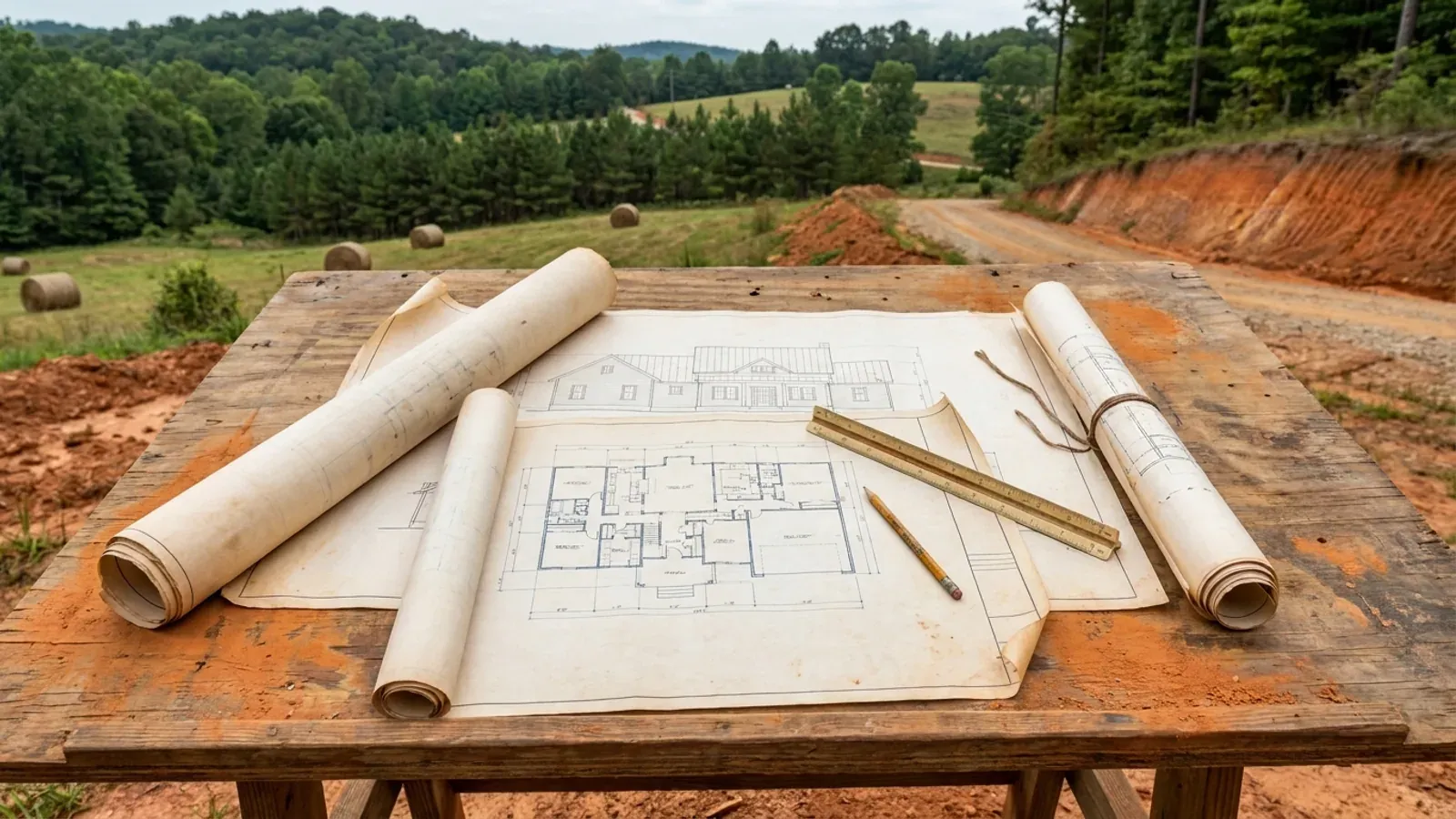
In South Carolina the appendices are out unless they were named, and a local amendment that is not on the Council's list is invalid
Two provisions decide most permit-counter arguments in this state, and almost nobody quotes them. Regulation 8-236(D): "The appendices included with all building codes are not intended to be enforced unless specifically referenced in the texts of the codes or specifically included by name and letter designation at the time of adoption by Council." So an appendix is not part of the South Carolina code merely by being printed in the book — it has to have been called out. And the Building Codes Council's own adoption notice for the 2021 codes says the same thing about local variations: "The International Codes are to be used in conjunction with the latest code modifications approved by the Council. Only the modifications approved and listed on the Council's website are valid for use in the State. Building code modifications that have not been approved by the Council are invalid and cannot be adopted, employed or enforced by municipalities and counties." The list of granted local residential modifications under the 2021 codes is one item long: Greenville County, 2021 International Residential Code Appendix AF, Radon Control Methods, Sections AF101.1 through AF103.12, authorised on the Council's meeting minutes of 22 March 2022 — and even that takes effect only after adoption by local ordinance. So for the rest of South Carolina the honest sentence is that there are no local amendments to the residential code; the state's code is the code.
Where we deliver permitting & engineering
In South Carolina the code is not what changes when you cross a city limit. § 6-9-10(A) makes enforcement mandatory for every municipality and every county, and § 6-9-30(A) puts the unincorporated area of each county under a building official too, so acreage outside town is covered rather than exempt. What changes is who reviews the drawings and what they ask for: § 6-9-50(A) leaves the adopted codes’ administrative chapter — permits, plan review, inspection sequencing, the board of appeals — out of the statewide adoption unless the local governing body adopts it by ordinance. And the wind and seismic criteria change on the Building Codes Council’s maps, whose boundaries § 6-9-105(C) requires to follow physical features rather than county lines. Two parcels twenty miles apart can carry completely different engineering.
Serving clients across the entire region.
Every locality we build in has its own reviewer, its own fee schedule and its own filled-in design criteria. The service area pages set out what each one publishes.
What actually decides the price
Square footage is the number everyone leads with, and it is rarely the one that moves a barndominium budget. These four do.
-
Which edition your permit lands under
The 2021 South Carolina codes took effect on the Council's implementation date of 1 January 2023. The Council adopted the 2024 editions on 26 August 2025 with an implementation date of 1 January 2027. Two provisions fix which applies to your project, and they say the same thing from two directions: § 6-9-130(A) provides that buildings must be inspected in accordance with the codes in effect for the locality on the date of the issuance of the original building permit, and Regulation 8-236(B) provides that work for which a completed building permit application has been approved before the implementation date will be allowed to be completed and must be inspected under the codes in effect at the time the original permit was issued. On a build that spans the changeover, the permit date is the fact that matters.
-
Whether an appendix or a local modification actually applies here
Worth settling in writing at the outset, because it is the most common source of a late surprise. Regulation 8-236(D) keeps appendices out of the code unless they were specifically referenced in the code text or specifically included by name and letter designation at adoption. Regulation 8-236(C) prohibits local jurisdictions from writing or publishing any other building codes in part or in whole. And the Council publishes its granted local modifications; anything not on that list is invalid by the Council's own statement. The one granted residential item in the state is Greenville County's radon appendix.
-
Who is named on the application, and what they have to show
South Carolina puts the owner in the frame as well as the contractor, which is unusual enough to plan around. § 40-11-200(B) makes it a violation of the general contractor chapter for an awarding authority, owner, contractor or agent to consider a bid, sign a contract, or allow a contractor to begin work unless the bidder or contractor has first obtained the licences required — and provides that bids or contracts may not be reconsidered or resubmitted if the contractor was not properly licensed when the initial bid or contract was submitted. Where an owner is relying on one of the Chapter 11 owner exemptions, § 40-11-420(C) puts the permit in the owner's own name and requires the owner to list on the application the name and licence number of all licensed contractors performing work on the project.
-
What building without one costs
§ 6-9-80 sets a graduated civil penalty and a cure period. A first violation draws a fine of not more than $200, and the person must be given seven calendar days to remedy the violation or submit a plan of correction before being charged with a second violation; failure to do so draws a fine not to exceed $2,000, with each day a separate offence. Injunctive relief and mandamus are also available — and notably not only to the jurisdiction: the section reaches an action by an adjacent or neighbouring property owner who would be damaged by the violation. On rural acreage where a neighbour has a view of the build, that last clause is worth knowing about.
Permitting & Engineering in South Carolina: common questions
7 questions we get asked most often about building in South Carolina. If yours is not on the list, ask it directly.
Do the code's appendices apply to my build?
My department says the code requires something I cannot find in the code. What now?
Can my county get its own amendment to the residential code?
How does the code change in South Carolina, and when is the next one?
What happens if the code changes while I am building?
What is the penalty for building without a permit?
Am I exposed if the person I hire turns out not to be licensed?
Sources
Every figure and legal reference on this page traces to a published document. These are those documents, with the date each was read.
- 1.S.C. Code of Laws Title 6, Chapter 9, the Building Codes Act, https://www.scstatehouse.gov/code/t06c009.php (served text retrieved and read 5 September 2026) — § 6-9-10(A) (“shall enforce only the national building and safety codes provided in this chapter”), § 6-9-40 (the adoption procedure: State Register notice, a comment period of not less than one hundred eighty days, a study committee, at least one public meeting, and a decision within one hundred eighty days of the end of the comment period), § 6-9-50(A) (the administrative provisions do not apply unless adopted by the municipal or county governing body), § 6-9-55(A) (the Administrative Procedures Act lock on provisions affecting one- and two-family dwellings), § 6-9-63(C) and (E) (the Council’s function on variation requests, the two-thirds vote of members in attendance and the quorum), § 6-9-65(D) (a county may require a permit even for a structure that is an exempt farm structure), § 6-9-80 (the graduated civil penalty, the seven calendar day cure period, the $2,000 second-violation ceiling, each day a separate offence, and the injunctive and mandamus remedies reaching an action by an adjacent or neighbouring property owner), § 6-9-100 (the chapter is cumulative to other local ordinances), § 6-9-105(A) (local variation on grounds of local physical or climatological conditions) and § 6-9-130(A) (the codes in effect on the date the original building permit issued).
- 2.S.C. Code of Regulations Chapter 8, the South Carolina Building Codes Council’s regulations, https://www.scstatehouse.gov/coderegs/Chapter%208.pdf (application/pdf, 324,526 bytes, text layer extracted and read 5 September 2026) — the document the Council itself links from its Statutes and Regulations page, https://llr.sc.gov/bcc/statutes.aspx — Regulation 8-236(B), under which work for which a completed building permit application has been approved before the implementation date is completed and inspected under the codes in effect when the original permit issued; 8-236(C); 8-236(D), “The appendices included with all building codes are not intended to be enforced unless specifically referenced in the texts of the codes or specifically included by name and letter designation at the time of adoption by Council”; 8-236(E); 8-215, the definition of a building code cycle; 8-240(A), the requirement to adopt the latest edition at least every four years; and 8-245, the burden of proof on a local modification and its subsections (B) and (C).
- 3.South Carolina Building Codes Council, “2021 South Carolina Code Adoptions”, https://www.llr.sc.gov/bcc/pdffiles/SC-Code-Adoption-Notice.pdf (application/pdf, 166,618 bytes, text layer extracted and read 5 September 2026) — “Only the modifications approved and listed on the Council’s website are valid for use in the State. Building code modifications that have not been approved by the Council are invalid and cannot be adopted, employed or enforced by municipalities and counties.”
- 4.South Carolina Building Codes Council, “Building Code Adoption”, https://llr.sc.gov/bcc/BCAdoption.aspx (served HTML read 5 September 2026, 31,793 bytes) — the 2021 editions in force, the 2024 editions adopted 26 August 2025 with a local implementation date of 1 January 2027, and the complete list of granted local modifications — and the sole granted local residential modification under the 2021 codes: Greenville County, 2021 International Residential Code Appendix AF, Radon Control Methods, Sections AF101.1 through AF103.12, with the page citing the Council’s meeting minutes of 22 March 2022 and stating that granted modifications may be placed in effect after adoption by local ordinance.
- 5.South Carolina Building Codes Council, “Code Adoption Process”, https://llr.sc.gov/bcc/adoptionprocess.aspx (served HTML read 5 September 2026) — modifications may be granted on a local or statewide basis as provided in Regulation 8-240, each request must be submitted separately on a Council-approved form with documentation of the local physical or climatological need, and only an official representative of the local jurisdiction or of the proposing professional association may file one.
- 6.South Carolina Building Codes Council, “2024 Final Modification Index”, https://llr.sc.gov/bcc/PDFfiles/2024%20Final%20Modification%20Index%20with%20Hyperlinks.pdf (application/pdf, 4,418,838 bytes, text layer extracted and read 5 September 2026) — the 2024-cycle modifications, the 26 August 2025 adoption and the 1 January 2027 implementation date — the current cycle: Notice of Intent published in the State Register on 24 January 2025, a comment period running 3 February to 4 August 2025, a Council vote on 26 August 2025, modifications published in the State Register on 22 May 2026, and a local implementation date of 1 January 2027.
- 7.South Carolina Building Codes Council, “Building Codes in Effect for South Carolina”, https://llr.sc.gov/BCC/PDFfiles/Building%20Codes%20in%20Effect%20for%20South%20Carolina%20Final.pdf (application/pdf, 185,673 bytes, text layer extracted and read 5 September 2026) — the editions currently in force and their implementation dates.
- 8.South Carolina Building Codes Council, 2021 Code Modifications, published in the South Carolina State Register Vol. 46, Issue 5, 27 May 2022 and codified as the Regulation 8-1200 series, https://llr.sc.gov/bcc/PDFfiles/2021-Code-Modifications.pdf (application/pdf, 509,626 bytes, text layer extracted and read 5 September 2026) — the complete South Carolina modification set for the 2021 residential code, which is what “approved and listed on the Council’s website” amounts to in practice.
- 9.S.C. Code of Laws Title 40, Chapter 11, Contractors, https://www.scstatehouse.gov/code/t40c011.php (served text retrieved and read 5 September 2026) — § 40-11-200(B), which makes it a violation for an awarding authority, owner, contractor or agent to consider a bid, sign a contract or allow a contractor to begin work without the required licences, and bars reconsideration or resubmission of a bid or contract submitted while unlicensed; § 40-11-300(B), the immediate-withdrawal requirement and the bar on acting as a subcontractor on the same project; § 40-11-370(C), which bars an unlicensed entity from enforcing the contract and extends that to a licensed entity contracting under a name other than the one on its licence; and § 40-11-420(C), which puts the permit in an exempt owner’s own name and requires the application to list the name and licence number of every licensed contractor performing work on the project.
- 10.S.C. Code of Laws Title 40, Chapter 59, Residential Builders, https://www.scstatehouse.gov/code/t40c059.php (served text retrieved and read 5 September 2026) — § 40-59-30(B), which bars an unlicensed or unregistered person or firm from filing a mechanics’ lien or bringing an action at law or in equity to enforce a residential building contract, notwithstanding § 29-5-10; and § 40-59-280, the building official’s duty to refuse a permit absent evidence of a licence, a registration or an exemption, and to report suspected violators to the commission.
Keep reading
The pages that answer the next question this one raises.
Is It Legal in South Carolina?
One statewide code, and why § 6-9-65's farm-structure exemption can never reach a residence.
Read itHow Long Does It Take?
Why the permit procedure itself is set by local ordinance here, even though the construction standard is not.
Read itWhere We Build
Which authority actually reviews your parcel, city by city.
Read itReady to put permitting & engineering against a real plan? Start there and the rest follows.
Tell us about the land
Send the parcel ID or an address and we will come back with what can be built on it, the wind load it has to meet, and a realistic budget range. That conversation costs nothing.