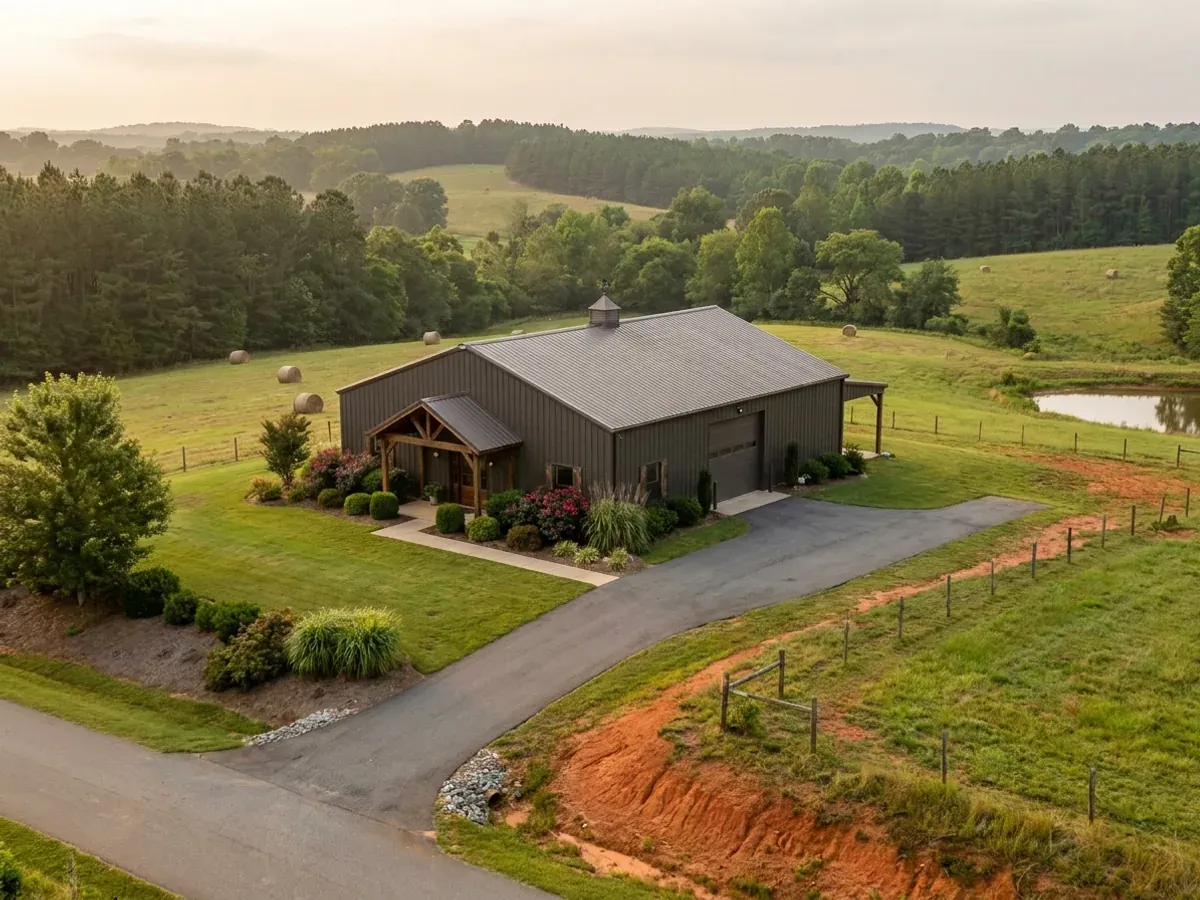
Turnkey Builds in South Carolina
Turnkey means you sign once and get keys. The project runs from raw land through permitting, site work, foundation, shell erection, systems rough-in and interior finish under a single contract. South Carolina makes the construction standard easy to predict and the process much less so, and it does it in one clause: S.C. Code § 6-9-10(A) requires every municipality and every county to enforce the state’s building codes and to enforce only those, while § 6-9-50(A) leaves the code’s entire administrative chapter out of that statewide adoption unless the local governing body has adopted it by ordinance. So your building is built the same way in all forty-six counties, and the permit forms, submittal list, fee schedule and inspection sequence are written county by county.
How a turnkey builds project runs
Four stages, in this order. The sequence matters more than it looks: getting engineering and permitting settled before anything is fabricated is what keeps a build from stalling.
Feasibility, starting under the ground
Before anything is drawn we establish whether the parcel will take a septic system, because that is the gate rather than a line item. Regulation R.61-56 § 200.2 declares soils with massive or platy structure, or substantial amounts of expansible layer clay minerals or smectites, unsuitable for onsite wastewater systems — a finding with no engineering fix written next to it. Zoning is checked in the same pass, and in South Carolina that means checking whether the parcel is zoned at all: § 6-29-720(A) says a governing body may adopt a zoning ordinance, and § 6-29-330(A) lets a county zone the whole unincorporated area or only parts of it.
Establish who actually enforces, then design and permit
S.C. Code § 6-9-30(A) requires each county to appoint or contract for a building official so that the unincorporated area of the county is under the jurisdiction of a building official, and each municipality to do the same inside its limits. § 6-9-20 then lets jurisdictions contract with one another, which is why some small departments are covered by a neighbouring county or a third party. We confirm which department holds your parcel and how it runs submittals before a set is assembled, then manage review comments through to issue.
Site work, foundation and shell
Clearing to the staked layout, cut and fill, compacted pad, drainage and driveway, then the foundation and the frame, and the building is dried in. Dried-in is the milestone that protects everything after it. The inspection sequence is a local ordinance in South Carolina rather than a statewide schedule, so the pour and the erection are scheduled around the department’s own calendar rather than the other way around.
Systems, finish and handover
Mechanical, electrical and plumbing rough-in, insulation, interior finish and fixtures, then final inspections and the certificate of occupancy. One date is worth putting in the schedule deliberately: the 2021 South Carolina codes govern a permit issued now, the 2024 editions implement on 1 January 2027, and § 6-9-130(A) fixes the answer to the date the original building permit was issued.
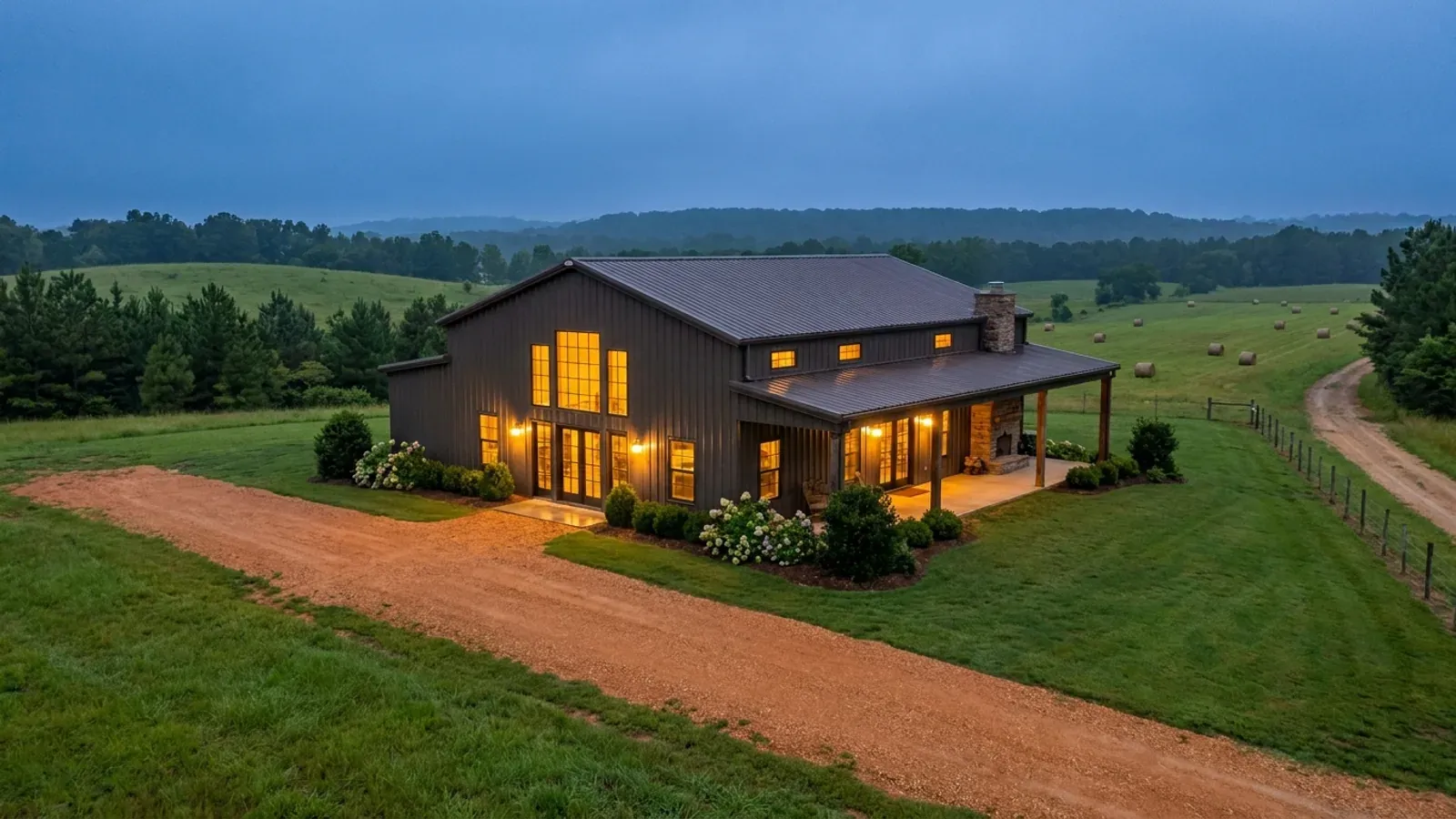
One code everywhere, but the permit procedure is written county by county
South Carolina's construction standard is uniform and its permit process is not, and the reason is a single clause. S.C. Code § 6-9-10(A) requires every municipality and every county to enforce the building codes, and to "enforce only the national building and safety codes provided in this chapter." Regulation 8-236(C) says the same from the enforcement side: "Local jurisdictions are prohibited from writing or publishing any other building codes in part or in whole." But § 6-9-50(A) carves the administrative half out of that statewide adoption — the provisions concerning the qualification, duties and administrative procedures for building officials and inspectors "do not apply unless they have been adopted by the municipal or county governing body," and Regulation 8-236(E) confirms that in the absence of Council adoption a local jurisdiction may adopt any or all of the administration chapters or establish its own procedures by ordinance. So the way your building is built is the same in all forty-six counties, and the permit forms, the submittal list, the fee schedule, the inspection sequence and the board of appeals are local. That is the thing to establish first on any parcel, in writing, before anything is drawn.
Where we deliver turnkey builds
In South Carolina the code is not what changes when you cross a city limit. § 6-9-10(A) makes enforcement mandatory for every municipality and every county, and § 6-9-30(A) puts the unincorporated area of each county under a building official too, so acreage outside town is covered rather than exempt. What changes is who reviews the drawings and what they ask for: § 6-9-50(A) leaves the adopted codes’ administrative chapter — permits, plan review, inspection sequencing, the board of appeals — out of the statewide adoption unless the local governing body adopts it by ordinance. And the wind and seismic criteria change on the Building Codes Council’s maps, whose boundaries § 6-9-105(C) requires to follow physical features rather than county lines. Two parcels twenty miles apart can carry completely different engineering.
Serving clients across the entire region.
Every locality we build in has its own reviewer, its own fee schedule and its own filled-in design criteria. The service area pages set out what each one publishes.
What actually decides the price
Square footage is the number everyone leads with, and it is rarely the one that moves a barndominium budget. These four do.
-
Which department holds your parcel — and how it runs permits
S.C. Code § 6-9-30(A) requires each county to appoint or contract for a building official "so that the unincorporated area of the county is under the jurisdiction of a building official," and each municipality to do the same inside its limits. § 6-9-20 then lets jurisdictions contract with each other, which is why some small South Carolina jurisdictions are inspected by a neighbouring county or a third party. Because the code's administrative chapter is only in force where a local governing body has adopted it, two neighbouring departments can run genuinely different submittal and inspection procedures on identical drawings.
-
Whether the parcel will take a septic system at all
This is the gate, not a line item. Regulation R.61-56.200.2 states that soils exhibiting massive or platy structure, and soils identified as having substantial amounts of expansible layer clay minerals or smectites, are unsuitable for onsite wastewater systems. SCDES's own land-buying guidance puts it plainly: "not all property is suitable for a septic system." The site evaluation fee is set in the regulation itself at $150.00 per site (R.61-56.102), and the permit to construct is valid five years from issuance provided site conditions are unchanged.
-
Whether the parcel is zoned, and by whom
South Carolina zoning is permissive and can be partial. § 6-29-720(A) says a governing body "may adopt a zoning ordinance to help implement the comprehensive plan" — nothing compels it — and § 6-29-330(A) lets a county exercise those powers "in the total unincorporated area or specific parts of the unincorporated area." So the question is not whether the county is zoned but whether this parcel is. § 6-29-320 and § 6-29-330 add a further twist: a county may place unincorporated land next to a municipality under the city's planning jurisdiction, so the reviewing body for a rural parcel outside a city limit is not always the county.
-
When the permit is pulled, relative to 1 January 2027
The 2021 South Carolina codes took effect on the Council's implementation date of 1 January 2023. The Council adopted the 2024 editions on 26 August 2025 with an implementation date of 1 January 2027. § 6-9-130(A) fixes which applies: a building is inspected under the codes in effect for the locality on the date the original building permit was issued. On a build that spans the changeover, the permit date is the fact that matters, and it is worth putting in the schedule deliberately rather than letting it fall where it falls.
Turnkey Builds in South Carolina: common questions
7 questions we get asked most often about building in South Carolina. If yours is not on the list, ask it directly.
Does the building code even apply out on unincorporated county land?
What is the actual sequence on a rural parcel?
Do I need a stormwater permit to build one house?
Is there anything different about building in a coastal county?
Who is the agency now that DHEC is gone?
How much can a county charge me for the permit?
What if an inspector and I disagree?
Sources
Every figure and legal reference on this page traces to a published document. These are those documents, with the date each was read.
- 1.S.C. Code of Laws Title 6, Chapter 9, the Building Codes Act, https://www.scstatehouse.gov/code/t06c009.php (served text retrieved and read 5 September 2026) — § 6-9-10(A) (every municipality and county shall enforce, and “enforce only”, the codes provided in the chapter), § 6-9-20 (contracting between political subdivisions), § 6-9-30(A) (each county under a building official “so that the unincorporated area of the county is under the jurisdiction of a building official”) and § 6-9-30(B) (the financial-hardship exemption affidavit, for up to five years and renewable), § 6-9-50(A) (the administrative provisions apply only where locally adopted), § 6-9-90 (local fees) and § 6-9-130(A) (the codes in effect on the date the original building permit issued).
- 2.S.C. Code of Regulations Chapter 8, the South Carolina Building Codes Council’s regulations, https://www.scstatehouse.gov/coderegs/Chapter%208.pdf (application/pdf, 324,526 bytes, text layer extracted and read 5 September 2026) — the document the Council itself links from its Statutes and Regulations page, https://llr.sc.gov/bcc/statutes.aspx — Regulation 8-236(C), “Local jurisdictions are prohibited from writing or publishing any other building codes in part or in whole”; 8-236(E), which leaves the administration chapters to local adoption by ordinance; and 8-180, appeal from a final action of the Council to the Administrative Law Court.
- 3.South Carolina Building Codes Council, “Building Code Adoption”, https://llr.sc.gov/bcc/BCAdoption.aspx (served HTML read 5 September 2026, 31,793 bytes) — the 2021 editions in force, the 2024 editions adopted 26 August 2025 with a local implementation date of 1 January 2027, and the complete list of granted local modifications.
- 4.S.C. Code of Regulations R.61-56, Onsite Wastewater Systems, SCDES copy at https://des.sc.gov/sites/des/files/Library/Regulations/R.61-56.pdf (application/pdf, 4,282,530 bytes, downloaded and read as extracted text 5 September 2026) — § 102 (the $150.00 per-site evaluation fee, which is the regulation’s own figure), § 104 (the evaluation sequence, the site preparation required before the evaluator arrives, and the backhoe pits required above the Fall Line), § 200.2 (soils unsuitable for onsite wastewater systems) and the five-year validity of a permit to construct.
- 5.S.C. Department of Environmental Services, “Before You Buy Land”, https://des.sc.gov/permits-regulations/septic-tanks/homeowner-resources/you-buy-land (read 5 September 2026) — the agency’s own statement that not all property is suitable for a septic system.
- 6.S.C. Code of Regulations R.72-300 through R.72-316, Standards for Stormwater Management and Sediment Reduction, https://des.sc.gov/sites/des/files/Library/Regulations/R.72-300_72-316.pdf ; the R.72-302.A exemption list, including item (4) for single family residences and their accessory buildings and item (1) on agricultural structures of one or more acres that require a building permit, read at https://www.law.cornell.edu/regulations/south-carolina/R-72-302 (5 September 2026).
- 7.S.C. Department of Environmental Services, stormwater requirements for one to two acres of land disturbance, https://des.sc.gov/programs/bureau-water/stormwater/stormwater-construction-activities/1-2-acres-land-disturbance (read 5 September 2026) — the Larger Common Plan rule, the coastal half-mile band, and the qualified-individual requirement that applies inside it.
- 8.S.C. Code § 48-39-10(B) and (J) and § 48-39-130, Coastal Tidelands and Wetlands Act — the eight counties named by the General Assembly as the coastal zone, and the definition of a critical area, https://www.scstatehouse.gov/code/t48c039.php (served text read 6 September 2026); SCDES Coastal Zone Consistency Certification, https://des.sc.gov/programs/bureau-coastal-management/coastal-zone-consistency-certification (read 6 September 2026).
- 9.S.C. Department of Environmental Services, “DHEC Restructuring”, https://des.sc.gov/about-scdes/dhec-restructuring (read 5 September 2026) — Act 60 of 2024, the 1 July 2024 split into SCDES and the Department of Public Health, and the status of permits issued either side of that date.
- 10.S.C. Code of Laws Title 6, Chapter 29, the Local Government Comprehensive Planning Enabling Act — § 6-29-320 and § 6-29-330(A), under which a county may exercise its planning powers “in the total unincorporated area or specific parts of the unincorporated area”, and § 6-29-720(A), a governing body “may adopt a zoning ordinance”, https://www.scstatehouse.gov/code/t06c029.php (served text retrieved and read 6 September 2026).
- 11.S.C. Code § 6-1-400, the South Carolina Business License Tax Standardization Act (2020 Act No. 176), which opens by requiring a county or municipality that levies a business license tax to comply with the article, with subsections (B)(1) and (B)(2) on licences issued on a construction contract, https://www.scstatehouse.gov/code/t06c001.php (served text retrieved and read 5 September 2026).
- 12.S.C. Code of Laws Title 6, Chapter 8 — § 6-8-40(A) and (B), the registration a code enforcement officer, contract inspector or special inspector must hold, and the exception under which a South Carolina licensed architect or registered engineer may practise as a special inspector without it, https://www.scstatehouse.gov/code/t06c008.php (served text retrieved and read 5 September 2026).
Keep reading
The pages that answer the next question this one raises.
How Long Does It Take?
Census data on build duration, and why the permit clock is set by your jurisdiction's own ordinance rather than by the state code.
Read itHow to Finance a Barndominium
A single contract is also the structure lenders are most comfortable underwriting.
Read itBarndominium Cost Guide
Sourced ranges for the finished tier, so the quote has context.
Read itReady to put turnkey builds against a real plan? Start there and the rest follows.
Tell us about the land
Send the parcel ID or an address and we will come back with what can be built on it, the wind load it has to meet, and a realistic budget range. That conversation costs nothing.