Barndominium Builders in Laurens County, SC
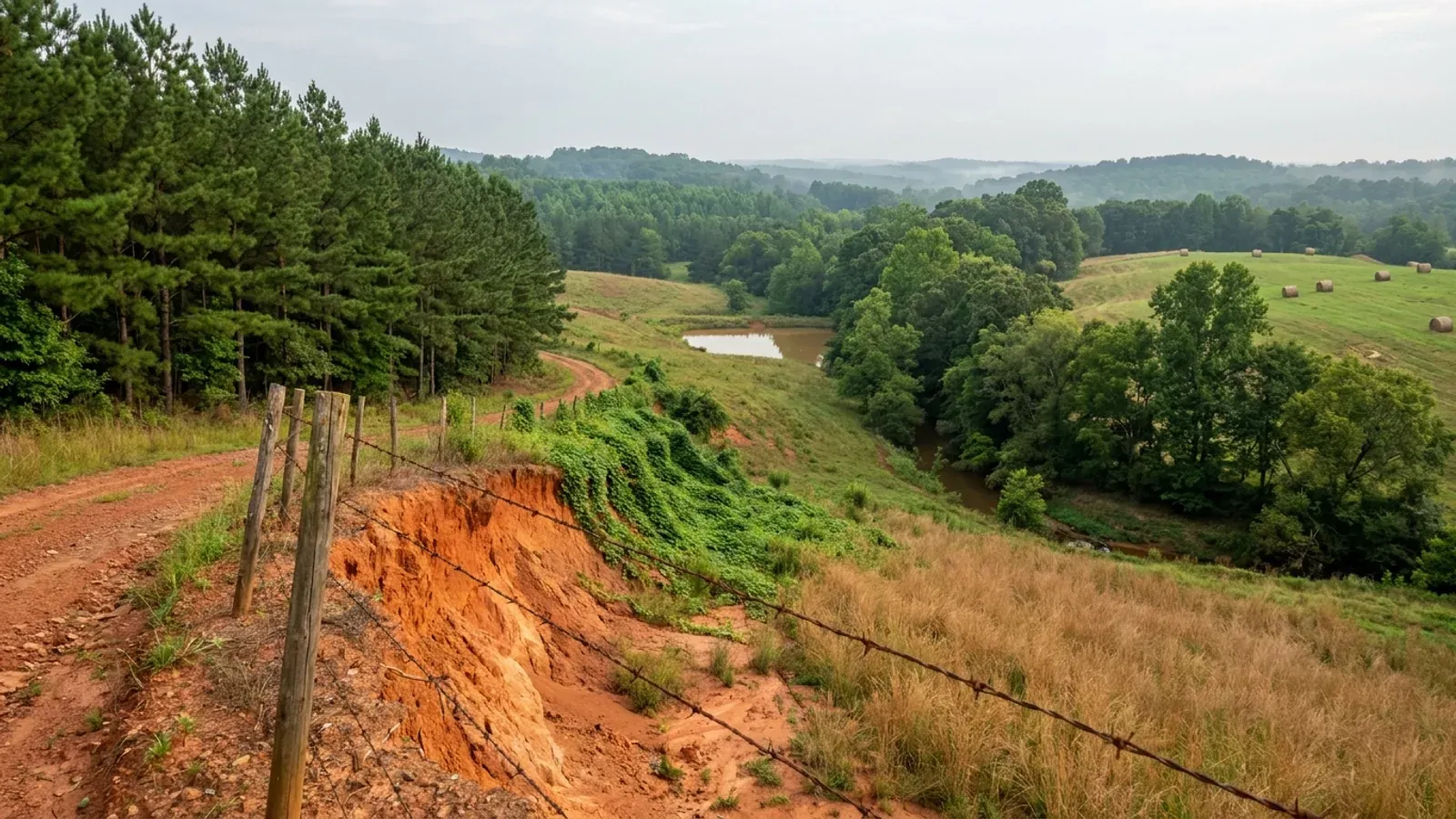
Laurens County is the Upstate's land answer: 121,421 acres in farms across 750 operations, 26.6 percent of a 712.9-square-mile county, and it shares a line with both Greenville County and Spartanburg County. It is also the rarest kind of jurisdiction in South Carolina to write about, because it has no zoning. Chapter 38 of the county code is headed ZONING and its entire text is the word (RESERVED), and the Planning Department says so in its own words: the county "does not have Zoning or a Zoning Ordinance in place." What governs instead is Subdivision Ordinance #926, codified as Chapter 33, and the building codes the state requires every county to enforce. So there is no district to check, no use table, no rezoning and no special exception here. The two things that actually decide whether a barndominium can go on a given Laurens parcel are the dimensional table in Ordinance #926 — which keys minimum lot size and width to which utilities serve the lot, not to a zoning map — and the septic evaluation, which on this mafic stretch of the Piedmont is where deals die.
Building conditions in Laurens County
The building code is the same in every South Carolina county: S.C. Code § 6-9-10(A) requires each municipality and county to enforce the Building Codes Council's codes and to enforce only those, and SC Regulation 8-236(C) bars a local jurisdiction from writing one of its own. The design numbers are not local either, but they are not one number for the state — Regulations 8-1202 and 8-1203 send wind and seismic to the Council's own map for this county, and those maps are drawn as contours, so the figure is read at your address rather than off a county name. What is genuinely local is who issues the permit and inspects the work, what that office charges, the permit procedure it adopted by ordinance, whether your parcel is zoned at all, and the rest of Table R301.2 — frost depth, termite probability and flood — which the jurisdiction fills in for itself.
Laurens County Planning Department, https://www.laurenscountysc.gov/departments/planning/planning.php (loaded 5 Sep 2026; control path on the same host returns an honest 404); Laurens County Code of Ordinances ch. 38 (ZONING), https://library.municode.com/sc/laurens_county/codes/code_of_ordinances?nodeId=COOR_CH38ZO — Municode client 6558, verified as Laurens County, South Carolina, 3 Catherine Street, Laurens SC, codified through Ord. No. 970 adopted 28 Oct 2024 (Supp. No. 7)
Laurens County Code § 33-91 and Table 10.A.6 (Ord. No. 926, Div. 10, § A, adopted 11 Oct 2022), with Table 11.A.4 at § 33-101, https://library.municode.com/sc/laurens_county/codes/code_of_ordinances?nodeId=COOR_CH33RESUOR ; the county's direction to that table is in its Planning FAQ for Realtors, Land Brokers, and Public Citizens, https://www.laurenscountysc.gov/departments/planning/planning_faq_for_realtors%2C_land_brokers%2C_and_public_citizens.php (both read 5 Sep 2026)
SC Building Codes Council, Wind/Seismic Maps, https://llr.sc.gov/bcc/maps.aspx (fetched 5 Sep 2026, 26,165 bytes; the served text contains no occurrence of "Laurens"); SC Regulations 8-1202 and 8-1203, 2021 Code Modifications, S.C. State Register Vol. 46 Issue 5, 27 May 2022, https://llr.sc.gov/bcc/PDFfiles/2021-Code-Modifications.pdf
S.C. Regulation 61-56, Onsite Wastewater Systems, § 200.2, https://des.sc.gov/sites/des/files/Library/Regulations/R.61-56.pdf (fetched as application/pdf, 4,282,530 bytes, text extracted with pdftotext -layout and read 5 Sep 2026); acreage and horizon values from USDA-NRCS Soil Data Access, survey area SC059 (Laurens County, South Carolina), tabular query posted to https://SDMDataAccess.sc.egov.usda.gov/Tabular/post.rest on 5 Sep 2026; series descriptions at https://soilseries.sc.egov.usda.gov/OSD_Docs/I/IREDELL.html and https://soilseries.sc.egov.usda.gov/OSD_Docs/E/ENON.html
Laurens County Building Codes Department, Fee Schedule, https://www.laurenscountysc.gov/departments/building_codes/fee_schedule.php (read 5 Sep 2026). Figures are the county's published fees and its published valuation rates; the $348,000 example is arithmetic on that table, not a price for the work
USDA NASS, 2022 Census of Agriculture, Laurens County South Carolina county profile cp45059, https://www.nass.usda.gov/Publications/AgCensus/2022/Online_Resources/County_Profiles/South_Carolina/cp45059.pdf ; U.S. Census Bureau Vintage 2025 county estimates, https://www2.census.gov/programs-surveys/popest/datasets/2020-2025/counties/totals/co-est2025-alldata.csv ; land area from the 2025 Gazetteer county file, https://www2.census.gov/geo/docs/maps-data/data/gazetteer/2025_Gazetteer/2025_gaz_counties_45.txt (all fetched 5 Sep 2026)
Also worth knowing before you build in Laurens County
- Above the Fall Line the soil evaluation is dug with a backhoe, not augered
- Laurens County is Piedmont, above the Fall Line, and R.61-56 § 104.1(5) says "backhoe pits shall be required above the Fall Line that separates the Piedmont area from the Coastal Plain as defined by the South Carolina Geological Survey." That is a machine on the parcel, not a hand auger, and § 104.1(6) requires the site to be prepared before anyone comes out: property lines cleared and marked, an identification marker at the front centre of the lot, stakes at the corners of the proposed building, the stub-out, septic tank and drainfield areas marked, the well location located, and a site sketch on the application. SC DES will do the evaluation, or you may hire a licensed Professional Soil Classifier privately and file the soil report with your application — DES's own page says a contracted classifier's rate is capped at three times the Department's permitting fee per site. Setbacks that bite on a rural Laurens parcel: 75 ft from a private well, 100 ft from a public well, 5 ft from any building and never under a driveway or parking area, and 25 ft from a drainage ditch or detention pond.
- A quarter acre of disturbed ground triggers a land disturbance permit
- County Code § 8-56 exempts from the land disturbance permit "construction or improvement of single-family residences or their accessory buildings which are separately built and not part of multiple construction in a subdivision development that do not disturb more than one quarter acre," and § 8-56(7) repeats the threshold for any activity. A quarter acre is 10,890 square feet — a house pad, a shop pad, a turnaround, a septic field and the drive to reach them will pass it on most Laurens sites. Under § 8-57 you may certify your own erosion and sediment control plan below two acres of disturbance, but only if water will not run more than one hundred feet in any one direction without a reduction in velocity, the cuts and fills do not exceed five feet in height or depth, and there is no concentrated off-site water to control. On rolling Piedmont ground, a level pad big enough for a shop is exactly what breaks the five-foot test, and then the plan has to be certified by a registered professional engineer, a professional soil erosion and sediment control specialist or a registered landscape architect. The county's published Building and Planning review fee for a single lot with no stormwater, infrastructure or new road is $50.00 per lot.
- A barndominium is never a farm structure in South Carolina
- The county code's own state-law note under Chapter 8 points at it: a local government may not enforce a nationally recognised building code against a farm structure, S.C. Code § 6-9-65(B). But read § 6-9-65(A): a farm structure is one built on a farm "other than a residence or a structure attached to it." A barndominium is a residence, so it is outside the exemption in every case, and the shop half of a shouse is outside it too because it is attached to a residence. The same section adds that the exemption is not automatic — § 6-9-65(C) requires an affidavit filed with the local building official before construction — and that it evaporates on conversion, so finishing a pole barn into living space later takes the whole building back under the code. Laurens County's own erosion ordinance draws the line in the same place from the other direction: § 8-56(3) exempts agricultural land disturbance but expressly excludes "an agricultural structure of over 200 square feet … which require the issuance of a building permit."
- The county adopted the codes by ordinance and named the appeals board itself
- S.C. Code § 6-9-50(A) leaves the administrative chapter of the I-codes out of the statewide adoption, so each jurisdiction supplies its own. Laurens County did it in County Code § 8-19, adopting the International Building, Residential, Plumbing, Mechanical, Fuel Gas, Fire, Energy and Property Maintenance Codes and the National Electrical Code "with South Carolina modifications" in toto, "applicable in the unincorporated areas of Laurens County," with § 8-19(b) making all future state updates automatic unless County Council repeals the article. § 8-21(b) makes the county building official the enforcement official; § 8-21(c) designates the Planning Commission as the board of adjustments and appeals under the technical codes — which is how an unzoned county gets an appeals body; and § 8-21(d) sets the penalty at not more than $200.00 or 30 days in Summary Court, each day a separate offence. The Building Codes Department confirms the implementation date: 1 January 2023 for the 2021 codes.
- Four municipalities permit their own, and the plat number tells you which
- Building Codes answers the jurisdiction question with a lookup rather than a map: pull the parcel on the county GIS and read the first three digits of the plat number. 901 is the City of Clinton, 904 the City of Fountain Inn, 905 the Town of Gray Court and 906 the City of Laurens; every other prefix is the county at 864-984-6659. That matters more here than in a zoned county, because those four municipalities are where public water and sewer reach — and under Table 10.A.6 the service at your lot is what sets the minimum lot area and width. One more piece of sequencing: a Laurens County building permit is good for six months, or six months from the last approved inspection, and expires automatically if no inspection is ever scheduled.
- Splitting family land: five agricultural lots, or three family divisions
- Ordinance #926 exempts several divisions from full platting, and two of them are how acreage in Laurens actually gets split. § 33-32(h), agricultural division: no more than five lots, each a minimum of two acres with at least one acre of contiguous land wholly above the one percent (100-year) floodplain or wetland. § 33-32(i), family division: each new tract deeded to a spouse, grandparent, parent, stepparent, sibling, child, stepchild, adopted child or grandchild; the parent parcel may not be divided more than three times this way; each tract must meet SC DES requirements for a septic system; access onto a road must be at least 40 feet wide by recorded deed or non-exclusive easement; and plans for the dwelling and a timeline are submitted with the request. Across all exempt divisions, § 33-32(a) allows only one dwelling unit per newly created parcel. And § 33-33 is the one that costs money on a back lot: a lot not abutting a publicly maintained road must front a paved private road or access easement, paved a minimum of 20 feet beyond the public right-of-way.
- The non-conforming-lot rule changed in February 2026 and is not yet codified
- As the code currently reads, § 33-22(1) says "no new structure shall be placed on a nonconforming lot except in conformity with the current requirements and standards of the county's Code of Ordinances" — which, on an old undersized tract of record, is the sentence that stops a build. Laurens County Council adopted Ordinance No. 1001 on 9 February 2026, titled "AN ORDINANCE TO AMEND ORDINANCE NO. 926, DIVISION 3(A) TO ALLOW FOR THE PLACEMENT OF STRUCTURES ON NON-CONFORMING LOTS," together with Ordinance No. 991 replacing Division 12, Open Space Residential Development. Both are listed by Municode as adopted but not yet codified, and the county posts them as scanned PDFs with no text layer, so the operative wording has to be read at the Planning Department. If your parcel is a small older lot of record, that ordinance is the first thing to ask about. Variances from #926 are heard by the Planning Commission; the published fee is $400, or $100 for a single-family, owner-occupied, single lot.
S.C. Regulation 61-56 §§ 104.1(5), 104.1(6), 200.6, https://des.sc.gov/sites/des/files/Library/Regulations/R.61-56.pdf (read 5 Sep 2026); SC Department of Environmental Services, Professional Soil Classifiers, https://des.sc.gov/permits-regulations/septic-tanks/professional-soil-classifiers ; the county's Planning FAQ routes septic questions to SC DES rather than to a county office, https://www.laurenscountysc.gov/departments/planning/planning_faq_for_realtors%2C_land_brokers%2C_and_public_citizens.php
Laurens County Code §§ 8-55 to 8-57 and 8-65 (Ord. No. 895, 22 Jun 2021), https://library.municode.com/sc/laurens_county/codes/code_of_ordinances?nodeId=COOR_CH8BUCOREAC_ARTIIISOERSECOOR ; Laurens County Building & Planning Major Subdivision Review Fees, https://www.laurenscountysc.gov/Images/Documents/Departments/Planning/Final%20Webpage%20Building%20&%20Planning%20Review%20Fees%202025.pdf (both read 5 Sep 2026)
S.C. Code § 6-9-65, served in full at https://www.scstatehouse.gov/code/t06c009.php (fetched 5 Sep 2026, 60,174 bytes); Laurens County Code ch. 8 state-law reference note and § 8-56(3), https://library.municode.com/sc/laurens_county/codes/code_of_ordinances?nodeId=COOR_CH8BUCOREAC_ARTIIISOERSECOOR
Laurens County Code §§ 8-19 to 8-21 (Ord. No. 823, 8 Nov 2016; Ord. No. 874, 14 Apr 2020), https://library.municode.com/sc/laurens_county/codes/code_of_ordinances?nodeId=COOR_CH8BUCOREAC_ARTIITECO ; Laurens County Building Codes Department, https://www.laurenscountysc.gov/departments/building_codes/index.php (both read 5 Sep 2026)
Laurens County Building Codes Department, Frequently Asked Questions, https://www.laurenscountysc.gov/departments/building_codes/frequently_asked_questions.php (read 5 Sep 2026); Table 10.A.6 at Laurens County Code § 33-91, https://library.municode.com/sc/laurens_county/codes/code_of_ordinances?nodeId=COOR_CH33RESUOR
Laurens County Code §§ 33-32, 33-33 (Ord. No. 926, Div. 4, §§ A and B, adopted 11 Oct 2022), https://library.municode.com/sc/laurens_county/codes/code_of_ordinances?nodeId=COOR_CH33RESUOR (read 5 Sep 2026)
Laurens County Code § 33-22 and the Adopted Ordinances Not Yet Codified listing (Ord. Nos. 991 and 1001, both adopted 9 Feb 2026), https://library.municode.com/sc/laurens_county/codes/code_of_ordinances ; ordinance PDFs linked from https://www.laurenscountysc.gov/departments/planning/development_information_and_forms.php ; variance and appeal fees from the Building & Planning Major Subdivision Review Fees sheet, https://www.laurenscountysc.gov/Images/Documents/Departments/Planning/Final%20Webpage%20Building%20&%20Planning%20Review%20Fees%202025.pdf (all read 5 Sep 2026)
The expensive surprises are in the ground, not the building
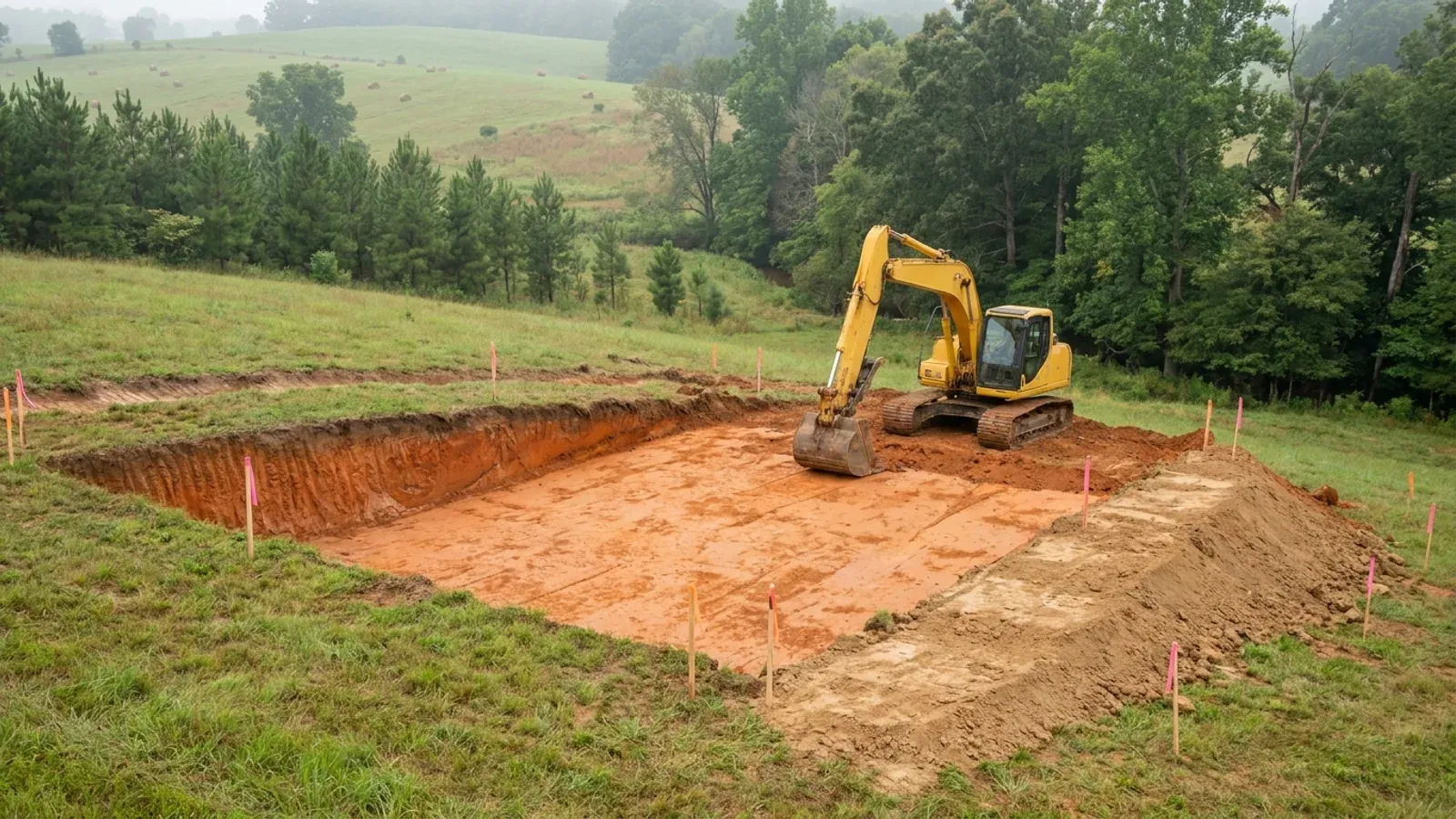
What moves a South Carolina budget is usually below grade, and more often than not it is the drainfield rather than the foundation. R.61-56 § 200.1 settles whether a parcel can take an onsite system from soil morphology — texture, structure, depth to a restrictive horizon and depth to the zone of saturation — and § 200.2 then rules out two conditions outright: soils exhibiting massive or platy structure, and soils with substantial amounts of expansible layer clay minerals or smectites. That second clause is the one that bites on the mafic Piedmont, where the shrink-swell series sit in quantity under York, Fairfield, Chester, Laurens, Union, Newberry, Greenwood, McCormick, Lancaster, Saluda, Abbeville and Edgefield. A foundation problem has a price and an answer; an unbuildable septic parcel has neither, which is why we look at it first. Bedroom count is the number to settle early, because § 61-56.501 drives design flow from bedrooms, design flow drives trench length, and trench length plus a repair area decides how much good soil the parcel has to have — shop square footage adds nothing to it. Above the Fall Line the evaluation is done in backhoe pits rather than borings alone, so the answer comes from a dug hole and not a form. The site work, the foundation and the drainfield therefore get resolved together rather than one at a time. We price the dirt before we price the building.
What we build in Laurens County
All nine services are available in Laurens County. What a build costs depends far more on the parcel than on square footage, so we price against your land rather than publishing a rate card.
Custom Plans
Barndominium plans drawn for your parcel and sealed at the point where South Carolina’s engineering exemption stops applying.
Barndominium Kits
Engineered shell packages for South Carolina land — open construction under the state’s own definition, and therefore not a modular building.
Turnkey Builds
Barndominium construction from raw land through to occupancy: one contract, one schedule, one party answering the building official.
What a build looks like
Three stages every Laurens County project passes through, from a raw parcel to a finished home. Site work first, because that is where the budget is decided.
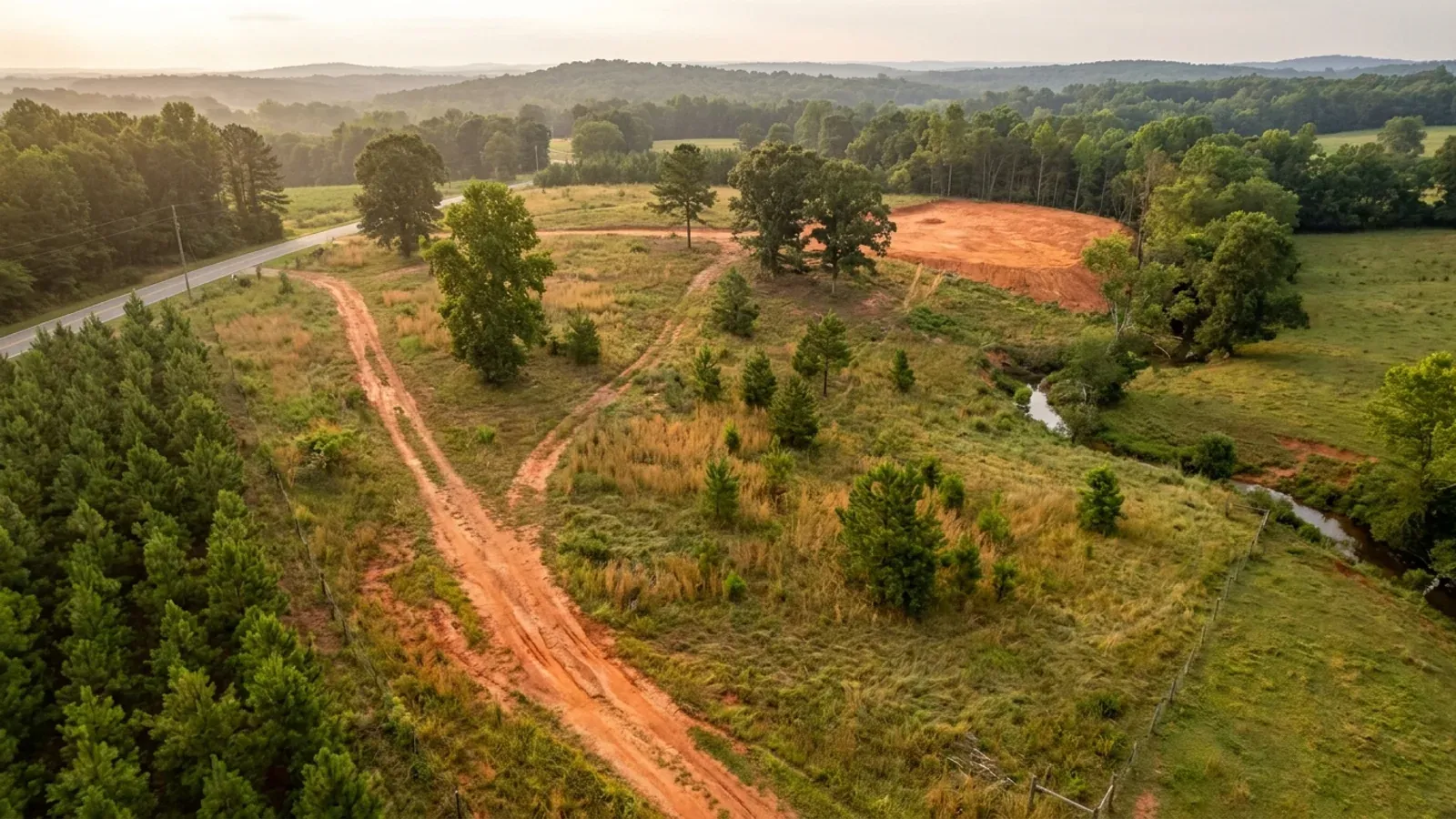
The parcel
Zoning, setbacks, flood zone and utility access get checked before anything is drawn.
Pad and permit
Clearing, grading and a compacted pad, while the submittal works through whichever office issues the permit where you are building.
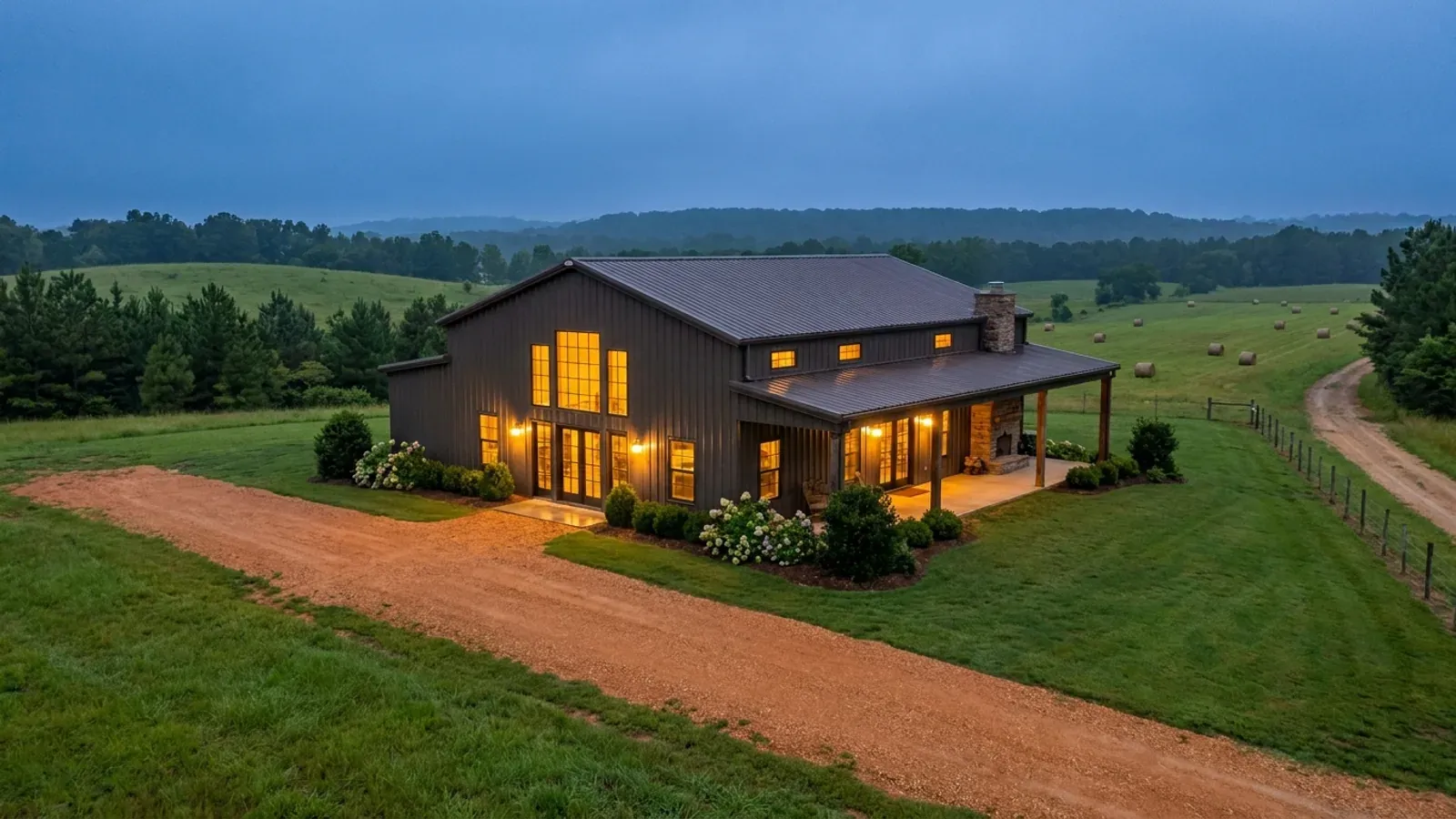
Frame to finish
Shell erected and dried in, then systems, insulation and interior finish through to CO.
Those are the rules where you are building in Laurens County. Tell us what you want to build and we will draw it to them.
Where we build around Laurens County
Laurens County and the rural land around it. The buildable acreage for a project this size usually sits outside the city limits, which is frequently what changes who issues your permit.
Keep reading
The questions that usually come next once you know what Laurens County allows.
Nearby areas we build in
Others we cover nearby. One may be a county and another a municipality inside one — and a South Carolina municipality can sit in two counties at once — so the office that issues the permit, the fees it charges, whether the land is zoned at all, and which design map covers it can all differ from one card to the next.
Building in Laurens County: common questions
8 questions we get asked most often about building in Laurens County. If yours is not on the list, ask it directly.
There is no zoning in Laurens County. Does that mean I can build whatever I want?
How big can the shop be relative to the house?
What is the real risk on my land — the foundation or the septic?
How does the septic evaluation actually work here, and who does it?
What will the county charge me for the permit?
Can I build the shop first under a farm exemption and finish the living space later?
What design wind speed applies in Laurens County?
I want to split off a piece of the family farm. What does the county allow?
Building in Laurens County?
Start with the plan. Tell us what you want to build and we will draw it, then confirm which office issues the permit for your parcel, what it will let you put there, and what wind load it has to meet. That conversation costs nothing.